

Код товара: 497108957


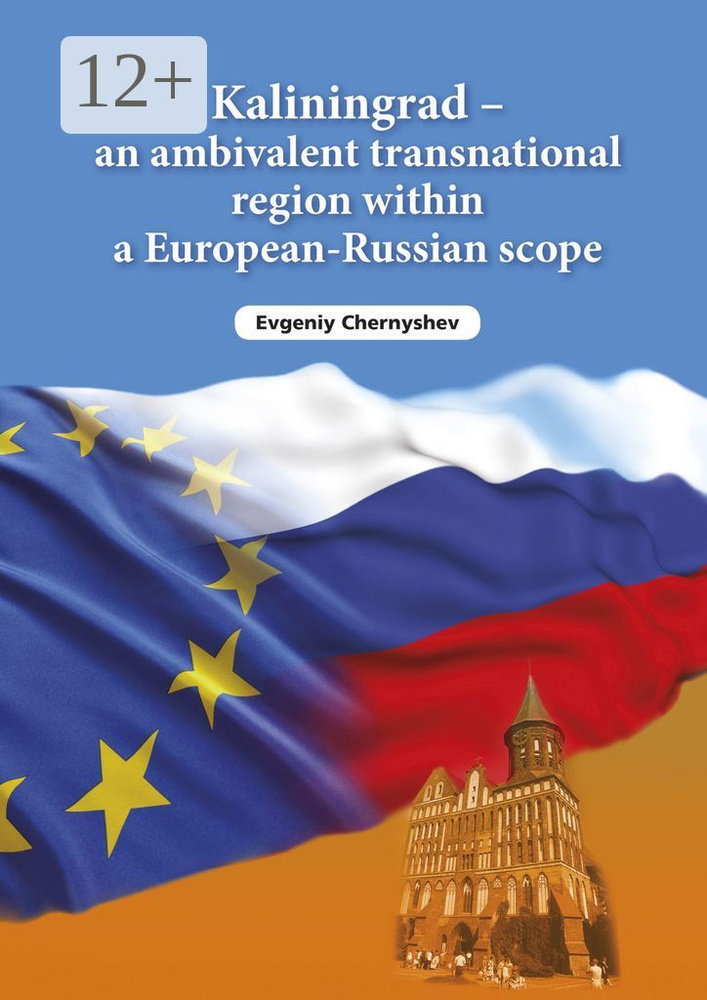
Kaliningrad - an ambivalent transnational region within a European-Russian scope | Chernyshev Evgeniy
Тип книги:
Печать по требованию
О товаре
Перейти к описанию
Автор
Автор на обложке
Evgeniy Chernyshev
Год выпуска
2022
Тип обложки
Мягкая обложка
Тип книги
Печать по требованию
О книге
Черно-белая книга в цветной мягкой обложке.
Книга изготавливается по технологии “печать по требованию”. Срок печати 96 часов.. This book focuses on Kaliningrad’s development as a transnational border
Товар закончился
2 844 ₽
Нет в наличии
Магазин
Подписаться
Ridero
Перейти
4.8
Чат
Заказы
310 K
О магазине
Часто задаваемые вопросы
Описание
Черно-белая книга в цветной мягкой обложке.
Книга изготавливается по технологии “печать по требованию”. Срок печати 96 часов.. This book focuses on Kaliningrad’s development as a transnational bordered zone, and the self-understanding and self-positioning of its youth in the context of regional culture. By taking into consideration historical and geopolitical factors, this empirical research was conducted in the Kaliningrad region, Berlin, and the cross-border area of «small border traffic» between Kaliningrad and Poland. Организация "Meta Inc." запрещена на территории РФ.
Книга изготавливается по технологии “печать по требованию”. Срок печати 96 часов.. This book focuses on Kaliningrad’s development as a transnational bordered zone, and the self-understanding and self-positioning of its youth in the context of regional culture. By taking into consideration historical and geopolitical factors, this empirical research was conducted in the Kaliningrad region, Berlin, and the cross-border area of «small border traffic» between Kaliningrad and Poland. Организация "Meta Inc." запрещена на территории РФ.
Оглавление
Acknowledgements
1. Introduction: Kaliningrad — an ambivalent transnational region within a European-Russian scope
2. The Kaliningrad region and its historical background
- 2.1. Birth of the Kaliningrad Oblast
- 2.2. Migration as a source of demographic shift before the collapse of the USSR: Formation of regional society
- 2. 3. Generational change and perception of cultural and historical heritage: Change in cultural paradigm
- 2.4. The Kaliningrad region as enclave: Theoretical and historical background
3. Positioning between Europe and Russia: Strategies and experiences of Europeanization and everyday exceptionality in Kaliningrad
- 3.1 «Fragment of Russia», «poor neighbour», and «pilot region»: Community with inherent qualities
- 3.2 SEBA: The initiative of modernization of the South Eastern Baltic Area through regional cooperation
- 3.3 What is an everyday «European’ life for Kaliningradians?
- 3.4 Small border traffic as an example of cross-border European life in Kaliningrad
- 3.5 Europeanization and European integration: Kaliningrad between Russia and the EU
- 3.6. Between the complex of «hostage» and «distinctiveness»: Separatist sentiment as a manifestation of «distinctiveness»
- 3.7. Kaliningrad as a «pilot region»
- 3.8. The consciousness of third-generation Kaliningradians: Historical heritage as an actor of mental transformation
- 3.9. Kaliningradian identity in transition
4. Kaliningrad regional culture: self-consciousness (Selbstverständigung) in transnational space
- 4.1. Boundary modalities: Historical context and cultural dialogue
- 4.2. Migration mobility after the collapse of the Soviet Union
- 4. 3. Transnational and regional: Kaliningrad regional culture
- 4.4. How and from whom do young Kaliningradians distinguish themselves?
- 4.5. Kaliningrad: From «periphery» to «bridge»
- 4.6. All-Russian National Census 2010: Phenomenon of nationality «Kaliningradian»
- 4.7. Consumption strategy: Materialistic concerns of Kaliningradians
- 4.8. The Berlin start-up scene as a channel of transnational mobility for young Kaliningradians
Conclusions
References
- Артикул
- 497108957
- Автор
- Chernyshev Evgeniy
- Автор на обложке
- Evgeniy Chernyshev
- Год выпуска
- 2022
- Тип обложки
- Мягкая обложка
- Тип книги
- Печать по требованию
- Язык издания
- Английский
- Количество страниц
- 311
- ISBN
- 978-5-0056-0290-9
- Возрастные ограничения
- 12+
Подборки товаров в категории Научная и научно-популярная литература

Рейтинга пока нет. Он формируется на основе актуальных отзывов на заказанные и оплаченные товары
Как правильно задавать вопросы?
Будьте вежливы и спрашивайте о товаре, на карточке которого вы находитесь
Если вы обнаружили ошибку в описанием товара, воспользуйтесь функцией
Как отвечать на вопросы?
Отвечать на вопросы могут клиенты, купившие товар, и официальные представители.
Выбрать «Лучший ответ» может только автор вопроса, если именно этот ответ ему помог.